Wednesday, March 20, 2013

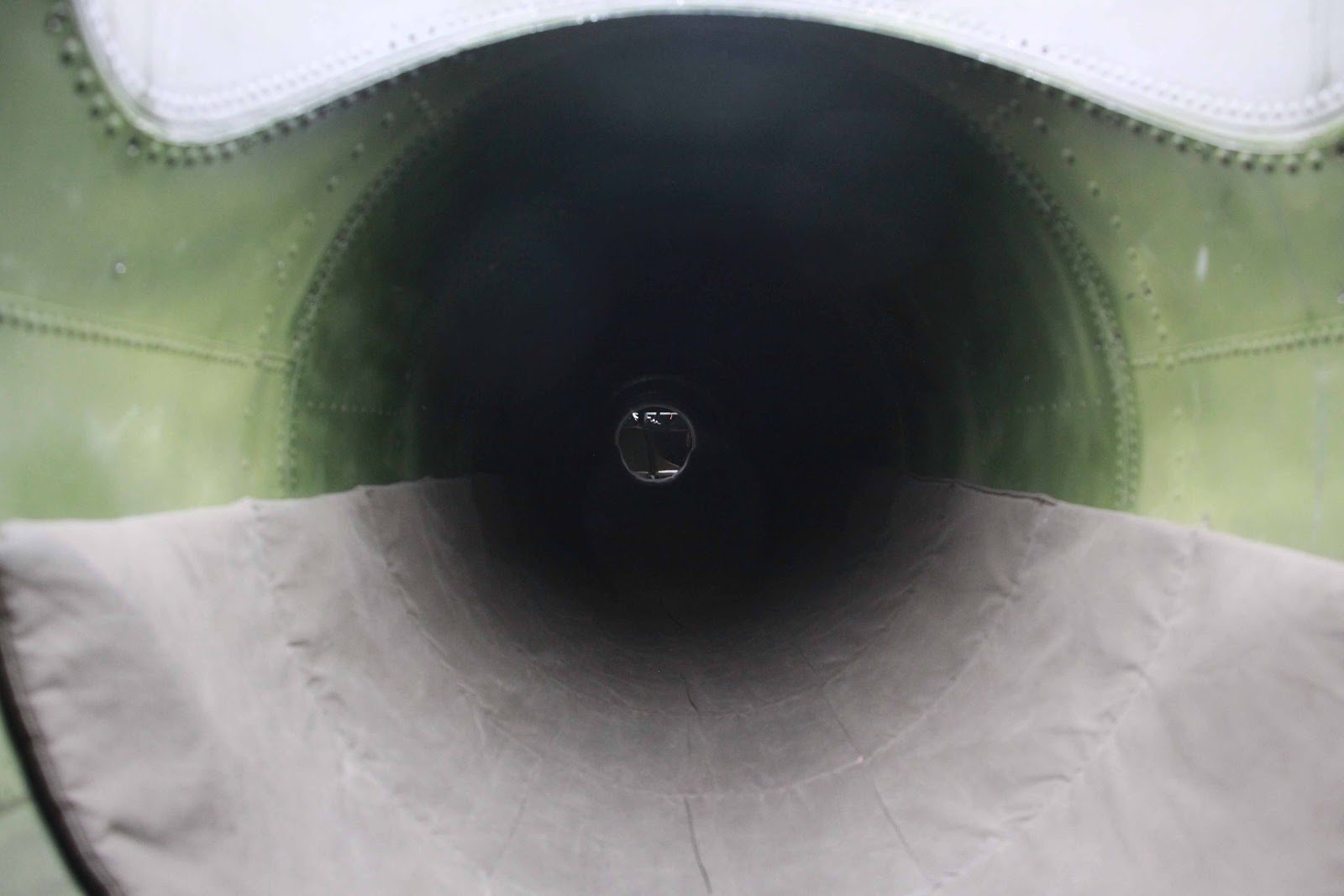
A Visit to Fifi, The World's Only Flying B-29


Edwin Duty was a mechanic in Salinas, CA in the 1940’s.  He was newly married with the outset of World War II.  With a skill set that was highly sought after, he was drafted into military service even though his age at the time would have normally excluded him. 

Through many trials, including basic training in Florida, he was eventually assigned to the Army Air Force, where he worked on the Boeing B-29, the Super fortress as a mechanic.  He achieved the rank of Staff Sergeant in the Army Air Force, serving in the 10th Maintenance Battalion.  The 769th Bombing Squadron, 462nd Group was stationed in Lucknow, Uttar Pradesh, British India.  They flew over “The Hump,” the Himalayas, to China. 

I have heard a few stories about Edwin Duty and the time he spent in India and China.  Although he never spoke much about his time there, there are little bits and pieces that can be placed together about this mechanic who serviced one particular B-29.

There is now only one flying, operational B-29 left in the world, and she is called “Fifi.”  After World War II, she eventually made her way to the China Lakes Range in California, where she was used as a bombing target.  In 2010, she was fitted with engines form another type of airplane, and now she goes on two month tours of the country.

On the Vigil of the Feast of St. Joseph, our family was blessed with the opportunity to see Fifi fly and land at Camarillo Airport, about an hour north of Los Ángeles.  After Holy Mass for Passion Sunday, we got ready, and made our way down to Camarillo, about a four drive.  Camarillo is the Southern California base for the Commemorative Air Force, a group that has as its mission to preserve antique aircraft.  Fifi surely is an antique, as she will turn 68 years old this year.  She rolled off the assembly line on the 31st of July, 1945.

It was a nice pleasant drive on over to Camarillo, home to the Major Seminary of the Archdiocese of Los Ángeles, and nearby in Simi Valley is the Ronald Reagan Library. 

From about Camarillo on, it seems like it is all strip malls and auto dealers until you reach San Clemente two hours later.  We had a room with a balcony, and it had a nice view  of the very busy Highway 101.  Traffic just seemed to be going on all day and night. 

Monday came, and we got ready for Fifi.  The CAF website said that Fifi would be getting in around Noon, and that it would be ready for viewing around 1400hr.  We had a quick lunch at Costco, and then made our way on over to Camarillo Airport.  We got a spot on a side street by the runway and waited for Fifi.

And waited.

And waited. 

And waited. 

We called the CAF at the airport, and they informed us that Fifi was indeed running late, about 2 and a half hours late.  It was like waiting for a regular flight.  We had a laptop, so we watched Rifftrax shorts to pass the time.  People who knew Fifi would be coming were milling about, some with rather nice lenses on their cameras.

Just about everyone in our family has sharp eyesight.  At around 1438hrs. they could spot this HUGE plane with several smaller planes surrounding it. 

It was Fifi!

Then we could hear the roar of the engines.   Gradually, we could see that Fifi has an escort of various fighter planes like British Spitfires, and American P-51 Mustangs. 


It was a magnificent sight!  It overflew us going west, and then circled off in the distance.  About 20 minutes later, the escorts started to land, and then it was Fifi’s turn. 


Here is a video we shot of Fifi landing.  For some reason or another, it does not want to embed within this post, so here is the link to it at youTube:


After waiting for two and a half hours, it was time to freshen up a bit, and then head on over to the airport.  There was a bit of a line to see Fifi, but it moved along at a nice clip.

Here are some pictures of Fifi when we took our tour.  As I am not familiar with the intricacies of this or any type of plane, I will just post some pictures here.  I would probably make errors in identifying the various parts anyways.


It was a good experience to witness a part of American military history, especially to see this plane fly.

I never got to meet Edwin Duty, which is my loss.  I would like to think that we would have gotten along well, and I would have loved hearing some of his stories from China and India.  I believe that he would have enjoyed seeing the four great-grandchildren his granddaughter had.

Thank you for your service to our country, Mr. Duty.  Thank you as well for the beautiful granddaughter you gave me as a wife, for I love her very much.  We will meet in the next life.

Requiem  aeternam dona ei, Domine, et lux perpetua luceat ei. Requiescat in pace. Amen.


 Edwin “Ed” Duty
(Back row, furthest right)
1908-1982

Tuesday, December 25, 2012

Beatem Nativitatem!


Your birth, O Christ our God, has shed upon the world the light of knowledge; for through it, those who worshipped the stars have learned from a star to worship you, the Sun of Justice, and to know you, the Dawn from on high. Glory to you, O Lord!

From the womb, before the morning star, I have begotten you. The Lord has sworn and he will not repent: You are a priest forever according to the order of Melchisedek.

Today the Virgin gives birth to the Transcendent One; and the earth offers a cave to the Unapproachable . The Angels sing his glory with the shepherds; the wisemen journey with the star. The eternal God is born for us an an infant child.

Beatem Nativitatem!
¡Feliz Navidad!
Merry Christmas!

Sunday, December 9, 2012

The Mona Lisa and the Image of Our Lady of Guadalupe, 2012


The Mona Lisa, or La Giaconda, is probably one of the most famous paintings in the world. It was begun around the year 1503, and was finished by Leonardo Da Vinci in France shortly before his death on May 2nd, 1519. It has stayed in France, mostly, for these past 490 years. After the French Revolution, it was moved to the Louvre. It was exhibited in Italy for a while after an Italian Patriot stole it, as he felt it should stay in Italy.

In a book by Jean-Pierre Mohen, Mona Lisa: inside the Painting, one can read that all through its history, the Mona Lisa has received exceptional and restrained care. An international commission in 1952 deemed that the care it has received has helped to conserve one of the most famous paintings in the world. This commission recommended that it be restored to remove some layers of varnish, and for some special treatment. It has also been treated with carbon tetrachloride, and later with an ethylene oxide treatment to preserve the painting from an insect infestation. In 1985, the painting was again treated with carbon tetrachloride as a measure to prevent further insect damage. To help with any warping, a crosspiece was installed in 1977.

In 2005, it was moved to a purpose-built, climate-controlled enclosure behind bullet-proof glass in the Salle des États in the Louvre.
Despite all of this work, and experts from around the world, the Mona Lisa will need further work in the next 15 years to fix cracking in the varnish that had been applied in the past century. Without this fixing of the varnish and further preservation, the Mona Lisa could face irreparable damage in the next few decades.


In December of 1531, 12 years after the Mona Lisa was finished, the Blessed Virgin Mary appeared to St. Juan Diego in present day Mexico City. She left her image to us, and she is known under the title of Our Lady of Guadalupe. It is contemporaneous with the Mona Lisa.
The image of Guadalupe is on a Tilma, an outer garment that was worn by Aztec males, like a cloak, with a long front to it like an apron, and used as a carry all. At the time, and as is the case with the Tilma of St. Juan Diego, it is made of the ayate fibers of the Maguey plant. The normal life span of such a garment is around 20 years. As of 2009, it has been 479 years since the Blessed Virgin Mary of Guadalupe appeared in 1531.
For roughly the first 160 years, the Tilma of St. Juan Diego hung in damp air and before the emissions of numerous candles in the Chapel of Tepeyac. There was no glass to cover the image. No soot appears to have ever damaged the Tilma. Dr. Phillip Callahan of the University of Florida studied the image in 1979. He records that a single votive candle can put out in its life over 600 microwatts of ultraviolet light. If you multiply this over hundreds of thousands of candles over centuries, and it is an intolerable environment for a painting. That much ultraviolet light should destroy any painting. It is not a painting though, at least by human hands. Numerous people also touched the image.
In 1791, roughly when the French Revolution happened and the Mona Lisa was moved to the Louvre, the Gold and Silver Frame around the Image of Guadalupe was being cleaned. The image was miraculously preserved when Nitric Acid used to clean the Gold and Silver spilled onto the image. The only trace of this disaster is what appears to be a watermark.
The image is 479 years old, yet the image cannot be reproduced. The colours are as vibrant today as 79 years ago, as vibrant as they were 479 years ago. The fibers of the Tilma are as pliable now as a new Tilma, despite its age.

On Monday the 14th of November 1921, in the midst of Government Anti-Catholic activity, Mass was being said in the Basilica of Guadalupe. at 10:30 AM a bomb, placed by a Mexican government agent, Luciano Perez, went off right below the Image of Guadalupe. The bomb had been hidden in a wreath of flowers, and heavily damaged a nearby Altar, and much of the surrounding masonry.

A Bronze and Iron Cross right underneath the Image was bent over by the explosion, so powerful was the blast, as can be seen above. The image of Guadalupe was untouched, with even the thin glass that was in front of the image undamaged. Miraculously, none of the faithful who were present at the Mass were injured either. As a side note, After having ascertained that everyone was alright, Father Juan Bautista Rangel Avila had a Server summon the police, and then continued to say Holy Mass.
This is just a brief, very brief history of the Mona Lisa, and the Image of Guadalupe. They are both roughly the same age. One is one of the most famous paintings in the world, having received the attention of the world's Art experts, and roughly 20 million dollars worth of restoration.
The other, we Catholics hold to be the image of Our Blessed Lady, is an image that is on Ayate fibers from the Maguey plant. The Tilma should have disintegrated about 460 years ago, had been exposed to the Salt Marshes of Mexico City, had countless people touch it, was exposed for 160 years without protection, had acid spilled on it, and survived a Terrorist Bomb.

Sunday, October 28, 2012

The Feast of Christ the King, 2012

Sunday the 28th of October is the Feast of Christ the King, D. N. Jesu Christi Regis. It was instituted as a double of the First Class with the encyclical Quas Primas by Pope Pius XI. If you have not read it, it is worth taking the time to do so (Read it here).

Pope Pius XI instituted the Feast of Christ the King on the Last Sunday in October, the Sunday that immediately precedes the Feast of All Saints.  Up until 1969, this remained so until it was moved to the Last Sunday of the Year, the Sunday before a new year begins with the First Sunday of Advent. Although the eschatological importance of the Kingship of Christ is somewhat made clearer by this change, it was in fact obscured in some peoples minds. The Kingship of Christ does not begin at the end of the world, as signified by putting it at the end of the year. The Kingship of Christ began even before he ascended into Heaven, for the Lord said that, "All power is given to me in Heaven and in Earth. (Mt 28:18)"Our obligation to submit to our King and his Laws and Commandments does not begin when he returns, but actually began when Jesus ascended into Heaven.

Changing the date for the Feast of Christ the King breaks the relationship of the King and his subjects; in this case between Christ and his Saints. Changing the Feast to the Last Sunday leads some to believe that Christ is not King now, and that we do not need to recognize him as such, not in the interior forum, nor in the public square.  Changing the Feast to the Last Sunday has lead some to declare that Jesus will eventually be our King at the end of time. In other words, changing the date of the Feast defeats the very purpose of the Feast of Christ the King, to pray for the conversion of the world to the One True Church, and that the world conforms to the Laws and Commandments given to us by Jesus Christ the King.


We can relate this Feast of Christ the King to history and to our current situation. Right at the point in history when Pope Pius XI wrote Quas Primas, the Church in México underwent a tremendous persecution that had been brewing for a very long time. Many of the Faithful were martyred, including St. Cristóbal Magallanes and his Companions, and famously, Blessed Miguel Pro Juárez. The state (Cesar) tried to supplant Christ the King, and make it so that Catholics in México would not have the freedom to worship Our True King and his Church.

So it is in our time that society would not have us vote as if Christ the King does not rule now in our hearts. We should always act knowing that Christ is King now, not at the end of time with his second Advent.

¡Viva Cristo Rey!

Sunday, October 7, 2012

October 7th: The Feast of Our Lady of the Most Holy Rosary

Today is the Feast of Our Lady of the Rosary, and the anniversary of the Battle of Lepanto.  The story of this day is a fascinating one, one that I could not do justice to.

How similar the circumstances appear; The West was facing an onslaught by Islam, but due to various situations and mistrust, the realms that are most threatened cannot come to a common unity to defeat their enemy.

Constantinople had been captured in 1453.  From there, there was a slow march by the Turks towards the heart of Europe. There were various landings by the Turkish Navy in Spain, Italy, Greece, and France. Albania was captured, as well as much African territory from Europe. However, Malta had withstood a siege by the Turks (600 Knights of St. john vs. 30.000 Turks) six years earlier, so the Turks could be defeated.

The Turks were on the march.  The Turks had captured parts of Greece, particularly ports such as Naupactos, known in Italian as Lepanto. the Holy League was formed, made up of Spain, the Papal States, the Republic of Venice, the Republic of Genoa, the Duchy of Savoy, and the Knights of Malta. All of these states contributed various vessels, plus various mercenary forces, so that the entire armada consisted of roughly 205 galleys, and 6 converted Galleasses, merchant ships converted to carry heavy artillery.  All the states saw the Turks as a menace to trade and the security of Europe, and a threat to the Holy Faith itself. The Holy League mustered 13.000 Sailors, along with 28.000 troops. The Turks had an advantage with nearly 300 ships, 13.000 sailors and 35.000 soldiers, led by the commander Ali Pasha.

Don Juan of Austria was the illegitimate son of Charles V, the Holy Roman Emperor, and the half brother of Phillip II, the King of Spain. He had proved himself as an able leader, and was persuaded by Pope St. Pius V to lead the Holy League into battle. St. Pius V had tried for many months to alert Europe of the coming danger, but many realms were embroiled with the Reformation. Don Juan saw the danger, and even though very young (24!), persuaded others to join him in his doom.

Before the Holy League went into battle, in early October, Don Juan did the unlikely action of having his entire armada fast for three days and to pray for victory.

Ali Pasha was so confident of victory, he sailed at the forefront on his ship the Sultana with his harem.

Many books have been written about this battle. In short, Don Juan sailed right into the heart of the Turkish armada. The Venetians sailed right into the Turkish right wing, and crushed it. the Holy League was then able to come around that right side, and encircle the Turks. The battle took 5 hours. between 12.000 to 15.000 Christian slaves and rowers on the Turkish Galleys were delivered unto freedom. The Turks left with about 70 ships.

The Holy Father that day was praying the Rosary in the Basilica of Santa Maria Maggiore. Whether the Holy Father had a vision, it is still unclear, but around the time Don Juan had gained victory around 4 in the afternoon, Pope St. Pius ordered that Masses of Thanksgiving be offered, and that the Confraternity of the Rosary proceed immediately to Roman Churches to pray.

Some historians report that just before Don Juan left to lead the Holy League, King Phillip of Spain presented him with a small painting of Our Lady of Guadalupe. This apparition had just happened less than 40 years before in the Spanish territory of Mexico. This painting was placed in the chapel of the admiral vessel of Giovanni Andrea Doria, the Admiral from Genoa. The painting can still be seen above the High Altar in the church of Santo Stefano d'Aveto, in the chapel of Madonna di Guadalupe near Genoa, Italy (Tried looking for a picture, but no success: Will keep looking, as this might be one of the oldest images of Guadalupe in Europe).

Pope St. Pius later that year declared that every October 7th, a commemoration of the Rosary would be a part of the Mass at the Vatican, and would be know as Our Lady of Victory. Two years later, Pope Gregory XIII established the Feast of the Most Holy Rosary and extended it to all Churches throughout the world that had Altars dedicated to the Rosary. In 1671, it was extended to all of Spain. After another vitory over the Muslims in Hungary in 1716, Pope Clement extended the Feast of the Rosary to the Universal Church.

Today, many forget why we have this Feast in our Calendar. Those who would bring terror to our country do not forget, so we should not forget the Rosary nor Our Lady on her day. It was through her intercession that victory was given to the Holy League that day. May we continue to seek her intercession.

Sancta Maria, ora pro nobis.

Friday, October 5, 2012

Happy Birthday, Eddie! 2012

Or, why we should rename this blog:

The Kramer Birthday blog!

Now on to the next birthday cake in a series of eighteen.  I think.

Happy Birthday, Eddie!

Can you believe that we first met you almost five years ago?   You have gotten so big in that time! You're like nearly six feet tall, now. Who gave you permission to grow so big?

Well, sorry we cannot be with you on your birthday, so here is a cake that looks like a submarine, because we know how to like to play with submarines.  Also, it's not on fire.

We out here in California wish you a happy birthday, and hope you get plenty of cake, nice presents to unwrap, and a good time with your family.

May God grant you many years to love and serve him, and may your patrons, St Joseph and St. Placid and Companions intercede for you. You are a good father, and even though humility prevents and protects you from saying so, you are a good role model of a Catholic husband, father, and friend.

I say "Happy," you say "birthday!"

"HAPPY!"

"BIRTHDAY!"

Saturday, August 11, 2012

Happy Birthday, Cecilia!: Once Upo A Unicorn

Happy Birthday, Cecilia!

A very Happy Birthday to our favorite Goddaughter, whose birthday is today already!

We know that a very special friend arrived for your birthday, and we thought you would like to know a little bit about her story.  

The Story of Rainbow Unicorn!

ONCE UPON A UNICORN:
A Birthday Story For Cecilia

Hi!  I am your new pet Unicorn!

For a long time, I lived in this toy store with lots of other pillow pets.  We were all waiting for someone to take us home.


Pick me!  Pick me!

Hurray!  Today someone picked me!  They took me to their house.  I wondered who I was for?

They had some kids there, I wondered if I was for one of them?


"I'm cute!  Is it for me?"


"It feels comfy!"


 "Rainbow Unicorn and I are drawing a Chibi!"

The kids really liked me, but it turns out I wasn’t for any of them.  I found out I was going to be a birthday present!  How exciting!  I get to surprise a little girl who is hoping for unicorn just like me! 


But the little girl I would be surprising lived far away.  Too far away to drive in a car.  I was going to have to travel by box.


I wasn’t sure if I would like being in the box at first.  It seemed kind of cramped in there.

But it was actually quite cozy.


Before they packed me up, I had some fun with the family.  I went to the California Rodeo, and i went to In-N-Out Burger.  Then I did the evening weather and had to see for myself where I was going.  Then I went to Big Sur, but it was foggy, and finally to a San José Earthquakes game.  I think Uncle Juan is kind of silly, don’t you?

Now I’m on my way. 

I can’t wait until you open my box so I can meet you.  Also, I could use some air.

We wish we could be there for your birthday, but enjoy these digital Rainbow Unicorn Cookies.  They are delicious!


Uncle Juan, Aunt Heather, and the kids, Ramón, Mónica, Nicholas and Lizzie all want me to wish you a happy birthday and to let you know that they love you very much!

And every time you hug me, you’ll be getting some of their love.

Happy Birthday, Cecilia!  May God bless you on your second anniversary of when you came into this world.  You make it special by your presence, and you are a joy and gift to your mommy and daddy.  


Wednesday, June 20, 2012

"He must increase, and I must decrease": The Feast of St. John the Baptist

June 24th is the Feast of the Nativity of St. John the Baptist.

Normally, we as Catholics celebrate the dies natalis, or birthday in Heaven of a Saint, Meaning the day of their death.  There are two notable exceptions in the Calendar of the Catholic Church.  One is the Blessed Virgin Mary, Mother of our Lord, and St. John the Baptist.  June 24th is the day we commemorate his birth.  The day we observe his beheading and martyrdom is the 29th of August. If we add in various other days in the Eastern Catholic Calendar, St. John the Baptist has 6 days dedicated to him, one of the few Saints to have multiple Feast days.

Why so many days for St. John the Baptist? What is so special?

From these here on out, the days are beginning to grow shorter. This feast day is in a sense, a midsummer's Christmas Eve. This day holds so much promise, the birth of a babe to barren parents. The true prodigy is still yet to come, a babe born of a Virgin, indeed the Saviour of the world on Christmas Day.

From the very beginning, God and Holy Mother Church bring about with thoughtful care many such parallels between the two Solemnities of the birth of St. John and the birth of the Lord. Just as the Angel announced to barren parents that they would conceive, the Angel also announces to Mary that she would bear a child.  St. John, just like in many statues in our Churches, is always pointing to the Agnus Dei, the Lamb of God, "Behold, this is he! The one whose sandalstraps, I am not worthy to loosen!"

Ut Queant Laxis is the first line of a hymn in honor of St. John the Baptist. The Roman Breviary divides it into three parts and assigns the first, "Ut queant laxis" to Vespers. The second, "Antra deserti teneris sub annis", to Matins, the early morning prayer. The third, "O nimis felix, meritique celsi", to Lauds. Authorship of the hymn is generally credited to Paulus Diaconus, a Benedictine monk who lived in Lombardy during the 8th Century. A popular story amongst the Benedictines is that Paul the Deacon was to chant the Exsultet for Easter, but had a hoarse voice. Being as the Father of the Baptist lost his voice for disbelief with the birth of his son, Paul the Deacon prayed to St. John the Baptist that his voice be restored enough to chant for the Easter Vigil.

The hymn is written in Sapphic stanzas, meaning a type of poetry written over four lines. This first line is famous in the history of music for the reason that the notes of the melody correspond with the first six notes of the diatonic scale of C. This fact led to the syllabic naming of the notes as Ut, Re, Mi, Fa, Sol, La, as may be shown by capitalizing the initial syllables of the lines:

UT queant laxis
REsonare fibris
MIra gestorum
FAmuli tuorum,
SOLve polluti
LAbii reatum, Sancte Ioannes.

The UT has been replaced by DO as that has an open sound that is easier. So even is you have not heard much of this hymn to the Baptist, you know something of it, as we now have Do Re Mi from it.

Here is a Slide Show of images of Mission San Juan Bautista in California set to Ut Queant Laxis as chanted by the Schola Sanctae Sunnivae & Hartkeriana.


Ut queant laxis resonare fibris
Mira gestorum famuli tuorum,
Solve polluti labii reatum,
Sancte Iohannes!

Nuntius celso veniens Olympo
te patri magnum fore nasciturum,
nomen et vitae seriem gerendae
ordine promit.

Ille promissi dubius superni
perdidit promptae modulos loquelae;
sed reformasti genitus peremptae
organa vocis.

Ventris abstruso positus cubili
senseras regem thalamo manentem,
hinc parens nati meritis uterque
abdita pandit.

Laudibus cives celebrant superni
te, Deus simplex pariterque trine,
supplices ac nos veniam precamur:
parce redemptis! Amen.

So that these your servants can,
with all their voice, to sing your wonderful feats,
clean the blemish of our spotted lips.
O Saint John!

An angel came from the heavens
to announce your father
the greatness of your birth,
dictating your name and destination.

He (Zacarias) doubted of these divine promises
and was deprived of the use of the speech;
but when you were born it recovered
the voice that had lost.

Still locked in your mother's breast,
you felt the King's presence housed in the vestal womb.
And prophet, before being born,
you revealed this mystery to your parents.

Now as the Angels celebrate thy praises,
Godhead essential, Trinity co-equal ;
Spare thy redeemed ones, as they bow before thee,
Pardon imploring. Amen.

Monday, June 18, 2012

Happy Birthday to Fr. Anthony and Teresa, 2012!


Today we bring out our official Mendoza Blog virtual birthday cake for our favorite Byzantine Catholic priest and our favorite mother of our favorite God-daughter.  Here is a Half Dome Cake.  Half Dome for our favourite camping family, and for a Priest who shows us the beauty of the Lord everytime we are at Divine Liturgy.
Thank you Father Anthony, for your Priesthood, for the Sacraments you bring us, and for being an alter Christus to us. When you celebrate Divine Liturgy, it is with great solemnity. When you show your humor, it makes us all laugh. You are a great example of what a Priest should be. You make us desire Jesus, and to aspire to holiness. Happy Birthday, Father!

Thank you Teresa, for being a great friend, even with such a great distance between us. You are a good mother to your children, in imitation of our Blessed Mother, and a good example of a Christian. Thanks for choosing us to be God-parents to one of your children. May God bless you, and may the Blessed Virgin of Guadalupe watch over you.

May God bless you both, and have a blessed birthday!

Tuesday, May 29, 2012

Pentecost Ember Days, 2012: May 30th, June 1st and 2nd

What are the Ember Days? The Ember Days of Pentecost are this Wednesday, Friday, and Saturday. In fact, Ember days occur four times during the year. Some who are younger or converts may have never heard of Ember Days. They were once quite important in the life of a Catholic.

Where does the word, Ember, come from? In English, The word "ember" comes from the Anglo-Saxon ymbren, which means a circuit or revolution, to go around in a circle, relating to the annual cycle of the year, having to do with the seasons (from ymb, around, and ryne, a course, running). In Spanish, there is no equivalent word, so this was translated as “De Témporas.” Some think that the name Ember comes from the Latin title of “Quatour Temporum,” but it is disputed. For English, the Anglo-Saxon derivation is more likely.

The Ember Days are fasting days, so they have a penitential character to them. Pope Leo the Great (died 461) called these days the “ieiunia quatuor temporum,” the Fast of the Four Seasons. These days always occurred at the time the seasons changed. So on these days, we would ask for special blessings for the events that happened during this time, such as a harvest.

In the Old Testament, there were times of fasting proscribed for the Jews (Zechariah 8:19). There was also a Jewish custom at the time of Our Lord Jesus Christ of fasting every Tuesday and Thursday. Very early on, Christians amended these customs. Wednesday became a day of Fast because it was the day that Christ was betrayed (Luke 22), and Friday because it was the day Jesus gave up his flesh for us. Saturday as well became a day of fast as the Romans saw it as the culmination of the Ember Week. Pope Gelasius I also saw Ember Saturday as the day to confer Holy Orders, since Apostolic Tradition prescribed that ordinations be preceded by fasting and prayer (Act 13:3).

The Jewish seasonal fasts and the Catholic Ember Days invite us to consider the wonder of the natural seasons and their dependence and relation to God. The lessons that are read on these days remind us of the cycle of nature and even more, the story of our redemption. Traditionally, these times were seen as periods of spiritual exercise and self-examination, a precursor to modern retreats and missions.

When do these Ember days occur? They are on Wednesdays, Fridays, and Saturdays, four times a year. In the Church year, they happen after the first Sunday of Lent, around Pentecost, after Holy Cross, then after St. Lucy, the 13th of December. There is a Latin mnemonic device to help remember when the Ember Days fell.

Dant Crux, Lucia, Cineres, Charismata Dia
Ut sit in angariâ quarta sequens feria.

“Holy Cross, Lucy, Ashes (Lent), and Pentecost
are the days of Fasting and Emberings."

Besides the penitential nature of these days, the Masses for these days are slightly different. On Wednesday, there are extra lessons before the Gospel, and on Saturday there are six lessons (seven on Ember Saturday in Advent). Readings that are read on Ember days are about the seasons. As an example, during Ember Saturday in September, we hear about harvests, and how we should be grateful to God for them. You could regulate your life by the Church calendar, such as when to plant crops. In relation, there would be blessings all through the year. On the Feast of St. John the Baptist, there was a blessing for Bonfires. Why not? All the branches from the trees and harvests would be dry and ready for kindling.

The fasting regulation for the Ember Days was only one full meal on Ember days, and on Ember Friday, no meat either was eaten, just like Ash Wednesday or Good Friday (1917 CIC 1252). To look at the other lung of the Catholic Church, the Eastern part, there are fasts throughout the year, such as one before the Dormition (Assumption) of the Blessed Virgin Mary, and no Meat, Oil, Eggs, or Milk during Lent.

Currently the Ember Day partial fast is a penitential option (not a requirement) under current law. No one is obliged to observe the Ember Days. However, it is a beautiful step on the road to recovery of our Catholic identity. We can do what we did in the past, such as pray for the children to be born in the next three months, for a bountiful harvest, for many holy priests to offer the Sacrifice of the Mass, do alms-giving and other penitential and charitable acts, and prayer for the souls in Purgatory. Let us especially pray for our priests and our Bishop, Richard Garcia, for without priests, we do not have the Sacraments. Without our Bishop, we do not have communion with the Pope, the Vicar of Christ. Let these Ember Days be especially oriented for Priests and Bishops of the Diocese for the upcoming Year of the Priest.

All things have their season,and in their times all things pass under heaven.
A time to be born and a time to die.
A time to plant, and a time to pluck up that which is planted.
A time to kill, and a time to heal.
A time to destroy, and a time to build.
A time to weep, and a time to laugh.
A time to mourn, and a time to dance.
A time to scatter stones, and a time to gather.
A time to embrace, and a time to be far from embraces.
A time to get, and a time to lose.
A time to keep, and a time to cast away.
A time to rend, and a time to sew.
A time to keep silence, and a time to speak.
A time of war, and a time of peace.

Ecclesiastes 3:1-8 (DRV)

Friday, May 18, 2012

Feast of the Mexican Martyrs: May 21st, 2012

A martyr is one who witnesses to the truth of our faith even to the point of death. It requires great courage and great faith for someone to become a martyr, but even more importantly, it requires tremendous love. It is for this very reason that Jesus said: “There is no greater love than to lay down your life for your friend.”

In the two decades following the Mexican Revolution of 1910-20, a rabidly anticlerical government waged an ongoing war against Catholicism, confiscating church property, expelling missionaries and closing Catholic schools and seminaries. The Church hierarchy opposed the Mexican Revolution and bishops suspended services in the country to protest the increasing restrictions that Mexico’s new national government placed on the Church. They placed the entire country under interdict.

Catholic priests, laymen and Knights of Columbus joined a rebellion movement, the Cristeros ("Christers"), in response to the Mexican government’s actions. Dedicated to “Cristo Rey” (Christ the King), scores of those involved in with the Cristeros were killed defending their faith. The number of Priests in each state were also limited. In the state of Tabasco, only one Priest was allowed for the entire state. Priests and Nuns wee forced to marry. Bombs wwere set off in the Cathedrals of Guadalajara and Morelia. Priests and laypersons alike were ordered to publicly denounce their faith; those who refused were tortured and executed. By the time it was over, upwards of 50,000 Catholics were dead.
Here ever so briefly, is the list of the 25 Mexican Martyrs Canonized by Pope John Paul II on the 21st of May 2000 in the Jubilee year. They collectively have the Feast Day of the 25th of May after the Primary Saints' Birthday in Heaven, their dies natalis.

St. Cristobal Magallanes Jara (parish priest, started secret seminaries, shot to death alongside St. Agustin Caloca in Colotitlan, Jalisco, Mexico on 25 May 1927)

St. Julio Alvarez Mendoza (priest, shot to death in San Julian, Jalisco on March 30,1927)

St. Agustin Caloca (priest, seminary prefect, shot to death along with St. Cristobal Magallanes Jara in Colotitlán, Jalisco on 25, Mayo 1927)
St. Atilano Cruz Alvarado (parish priest, shot to death in Teocaltiche, Jalisco on 1, July 1928)

St. David Galvan Bermudez (priest, seminary instructor, shot by firing squad in Guadalajara, Jalisco on 30, January 1915)

St. David Roldan Lara (layman, officer of "Catholic Action" and a religious liberty league, shot to death at age 21 in Suchil, Durango on 15, August 1926 along with St. Salvador Lara Puente)

St. David Uribe Velasco (parish priest, shot to death in San José Vistahermosa, Morelia on 12, April 1927)

St. Jenaro Sanchez Delgadillo (parish priest, hanged from a tree in Tecolotlán, Jalisco on 17, October 1927)

St. Jesus Mendez Montoya (parish priest, shot to death in Valtierrilla, Guanajuato on 5, February 1928)

St. Jose Isabel Flores Varela (parish priest, tortured, throat cut, in Zapotlanejo, Jalisco on 21, June 1927)

St. Jose Maria Robles Hurtado (parish priest, founded women's Congregation of Victims of the Eucharistic Heart of Jesus, hanged in the hills of Quila, Jalisco on 26, June 1927)

St. Justino Orona Madrigal (parish priest, founded Poor Clare Sisters of the Sacred Heart, shot to death in Cuquío, Jalisco on 1, July 1928)

St. Luis Batiz Sainz (parish priest, seminary's spiritual director, shot by firing squad in San Miguel del Mezquital, Zacatecas on 15, August 1926)

St. Manuel Morales (layman, father of three, officer of "Catholic Action" and a religious liberty league, shot to death in Sombrerete, Zacatecas on 15, August 1926)

St. Margarito Flores Garcia (parish priest, shot to death in Atenango del Río, Guerrero,on 12, November 1927)

St. Mateo Correa Magallanes (parish priest, gave First Communion to Bl. Miguel Pro, shot to death in Durango, Durango on 6, February 1927)

St. Miguel de la Mora de la Mora (priest, shot by firing squad in Colima, Colima on 7, August 1927)

St. Pedro Esqueda Ramirez (parish priest, catechist of children, shot to death in Teocaltitlán, Jalisco on 22, November 1927)

St. Pedro de Jesus Maldonado Lucero (parish priest, promoter of nocturnal adoration, blinded and beaten to death in Santa Isabel, Chihuahua on 11, February 1937)

St. Rodrigo Aguilar Aleman (parish priest, poet, hanged in Ejutla, Jalisco on 28, October 1927)

St. Roman Adame Rosales (parish priest, founded Daughters of Mary of Nocturnal Adoration, shot to death in Nochistlan, Zacatecas on 21, April 1927)

St. Sabás Reyes Salazar (Parish priest, tortured and shot to death in Tototlán, Jalisco on Holy Wednesday, 13, April 1927)

St. Salvador Lara Puente (layman, officer of "Catholic Action" and a religious liberty league, shot to death at age 21 in Suchil, Durango on 15, August 1926 along with St. David Roldan Lara)

St. Toribio Romo Gonzalez (parish priest, shot to death at age 27 in Tequila, Jalisco on 25, February 1928)

St. Tranquilino Ubiarco (parish priest, hanged at age 28 in Tepatitlán, Jalisco on 5, October 1928)

There were many more Priests and laypeople who were martyred. This first group was canonized in 2000. In 2005, another group of Martyrs specifically from the Archdiocese of Guadalajara was beatified. Collectively they do not have a Feast Day yet, although it could be anticipated to be the 1st of April. A list of them follows;

Bl. Anacleto Gonzalez Flores, and seven companions (Anacleto was a laymen, married, member of Catholic Association of Young Mexicans (ACJM), would give up information where Bishop Orozco y Jimenez was in hiding, tortured and feet slashed, shot in Tepatitlán, Jalisco on 1, April 1927 with José Dionisio Luis Padilla Gómez and Vargas González brothers below)

Bl. José Dionisio Luis Padilla Gómez (Layman, promoter of Eucharistic Adoration, member of Catholic Association of Young Mexicans (ACJM), shot in Tepatitlán, Jalisco on 1, April 1927 with Anacleto Gonzalez Flores and Vargas González brothers)

Bl. Jorge and Bl. Ramón Vargas González (Laymen, gave refuge to Priests, members of Catholic Association of Young Mexicans (ACJM), tortured and shot in Tepatitlán, Jalisco on 1, April 1927 with Anacleto Gonzalez Flores and José Dionisio Luis Padilla Gómez)
Bl. José Luciano Ezequiel Huerta Gutiérrez (Laymen, Father of 10, tortured and shot in Tepatitlán, Jalisco on 3, April 1927 with his brother Salvador Huerta Gutiérrez)

Bl. Salvador Huerta Gutiérrez (Layman, Father of 12, tortured and shot in Tepatitlán, Jalisco on 3, April 1927 with his brother José Luciano Ezequiel Huerta Gutiérrez)

Bl. Miguel Gómez Loza (Layman, Lawyer and defender of Catholic rights, shot near Atotonilco, Jalisco on 21, March 1928)

Bl. Luis Magaña Servín (Layman, shot in Arandas, Jalisco on 9 February 1928. He took the place of his brother who was going to be shot.)

Along with this group of Companions are the following;
Bl. Jose Trinidad Rangel Montaño (Priest, tortured and shot in Rancho de San Joaquín, Guanajuato 25 April 1927 along with Bl. Andres Sola Molist and Bl. Leonardo Perez Larios)

Bl. Andres Sola y Molist (Priest, tortured and shot in Rancho de San Joaquín, Guanajuato 25 April 1927 along with Bl. Jose Trinidad Rangel Montaño and Bl. Leonardo Perez Larios)

Bl. Leonardo Perez Larios (Layman, arrested for assisting at Mass of Fr. Sola, tortured and shot in Rancho de San Joaquín, Guanajuato 25 April 1927 along with Bl. Jose Trinidad Rangel Montaño and Bl. Andres Sola Molist)

Bl. Dario Acosta Zurita (Priest, shot in Veracruz, Veracruz on 25 July 1931 exactly three months after his ordination as a Priest)

And fourteen-year-old, Bl. Jose Sanchez del Río (Youth, followed his older brothers into battle to defend the Faith. Captured and tortured in a church Sacristy. Forced to watch an execution. Had feet slashed and forced to walk on salt to cemetery in Sahuayo, Michoacán on 10, February 1928)

There are many more people who were martyred for the Faith in Mexico who are honoured for the ultimate sacrifice that they gave during this time. One of them is Blessed Father Miguel Pro Juarez, SJ. It is important to note that he was not a Cristero but was in fact a pacifist, who was an underground Priest who baptized and secretly celebrated the Sacraments for the Faithful in and around Mexico City. He even studied briefly at the Jesuit novitiate that was once in the hills of Los Gatos near San Jose, CA. His is a famous story, but here is how his life ended. He was falsely accused of an assasination attempt on former President Obregon of Mexico, and arrested along with his two brothers. Without trial they were sentenced to execution. President Calles ignored a court order delaying the execution, and on the morning of November 23, 1927 Father Pro along with one of his brothers was shot while holding his arms in the form of a Cross, and saying, "Viva Cristo Rey! (Long Live Christ the King!)" It is believed to be the only martyrdom captured on film although the film is still hidden in Mexican government archives, and was photographed as well.
President Calles wanted plenty of photographs of this execution so as to discourage the Catholic population.
Not content with having fired a volley of bullets into Father Pro, another soldier went up to the body, and fired another shot into his head. The next day, over thirty thousand people were in the streets of Mexico City for the funeral.
There are yet other martyrs in Mexico of whom we know died heroically and as martyrs, but for various reasons, their cause for Sainthood to be recognized on Earth has not been advanced, even though they may surely be Saints in Heaven. Of some, there does not exist enough information. The photograph at the top of this post is of Father Francisco Vera, Parish Priest of parish of Sangre y Cuerpo de Cristo (Parish of the Blood and Body of Christ, or Corpus Christi) in the city of Jalostotitlan, Jalisco. While secretly saying Mass, Father Vera was discovered. Allowing his flock to escape, Father Vera was sentenced to death for the crime of being a Priest.

He was not allowed to take off his vestments. The photograph exists solely because the captain of the squad wanted to prove how zealous he was in the persecution of Catholics, so he had this photograph taken of Father Vera taken right before the volley of bullets struck him, and sent to President Calles. The best that this incident can be dated is to around early April of 1927. The faithful of the parish several years afterwards report that Septuagesima had begun, but that Father Vera was dead before Easter of that year. His body was dumped in a refuse pile outside of down and further desecrated.

Father Vera and others like him who were martyred do not have a case open for them for Sainthood, because there were no witnesses to his martyrdom other than those who executed him. In the case of martyrdom, the Church accepts the testimony of those who out of hatred, martyred someone for the Faith. Alessandro Serenelli, the murderer of St. Maria Goretti, was present at her Canonization, and had given testimony in her cause. In the case of Father Vera, there were no witnesses to his martyrdom, only a haunting picture of a 70 year old Priest, holding his hands in prayer, his back to the Church wall. He is still vested for Mass, the vestments indicating he is a Priest. You can clearly see his Maniple, the symbol of Christ's chains that bound him on that last day. This picture, that was taken to discourage Catholics, should instead give us joy. Tertullian said that the Blood of Christians is seed (Semen est sanguis Christianorum, Apolegeticum, 50, 13). We shall conquer in dying. Father Vera may not ever be raised to the Altars of the Church as St. Cristobal Magallanes, but we can be cetain that he died as a Priest, as an Alter Christus.

Someday, we will be able to paste into our Missals the Masses for new Saints that are on our Altars, such as St. Maximillan Kolbe. For these Mexican Martyrs, because of the date of, it will more than likely be a Third Class Feast along with St. Gregory that same day. The Mass will either be "Intret" if outside of Eastertide, or "Sancti Tui" if within. Do however, think of these and the other martyrs who have been the seed for our Faith. Know that this is a real Mexican holiday, unlike Cinco de Mayo. Cinco de Mayo commemorates a temporary victory over an occupying army that eventually beat Mexico anyway, and amounted for nothing. The Martyrs of Mexico (and all martyrs) are the eternal triumph of Jesus Christ the King over Satan. We shall conquer in dying. That counts for everything.

All information is taken from the Vatican website, and from various books, among them;
La Cristiada by Jean Meyer, 3 Vol.
El Clamor de la Sangre by Joaquin Blanco Gil
Los Martires Mexicanos by Fr. Joaquin Cardoso, SJ

Happy Feast Day of the Mexican Martyrs!